300,526 Smoothies

The one argument I can pose against renewables as the backbone of our energy grid is that they aren’t… well consistently reliable. You can have as many solar panels as you want. They can cover your roof and yard. Yet, without sunlight they won’t do you any good. Wind turbines are great until there is no wind. We cannot control the weather and at times the sun will shine and we can harness excess energy to the full capacity of our solar panels, but the sun shining today has little influence on if I need to charge my laptop tomorrow, or if I’m going to want to watch TV next winter. We need to bridge the gap between when we capture the abundant renewable energy around us and when we want to use it. The obvious answer here is batteries. So, let’s look at the how we store renewable energy today.

The largest store of renewable energy in the US is currently dams. Unlike a wind turbine of solar panel that needs the appropriate weather conditions to generate energy, a dam can store its energy producing resource, water, and then release the water to rotate its turbines as the need for energy arises. As of 2020 the US has 22 gigawatts of energy stored in dams. Unfortunately, this is the majority of our renewable energy storage capacity, with only an additional gigawatt of storage capacity in batteries. On a global scale, the International Renewable Energy Agency’s (IRENA’s) study on renewable energy storage is optimistic and the forecast is driven by declining costs. Per the IRENA, by 2030 total costs for installed battery systems could fall anywhere between 50-60% with prices reaching as low as $200 per kilowatt hour of energy storage. Though this is promising and exciting, this cost may still be a barrier to entry for many as the average price of a kilowatt hour in the US is only 13.31 cents. For a frame of reference, a kilowatt hour is sufficient energy to make 200 smoothies. So, in order to pay off each kilowatt hour battery, you would need to make 300,526 smoothies…
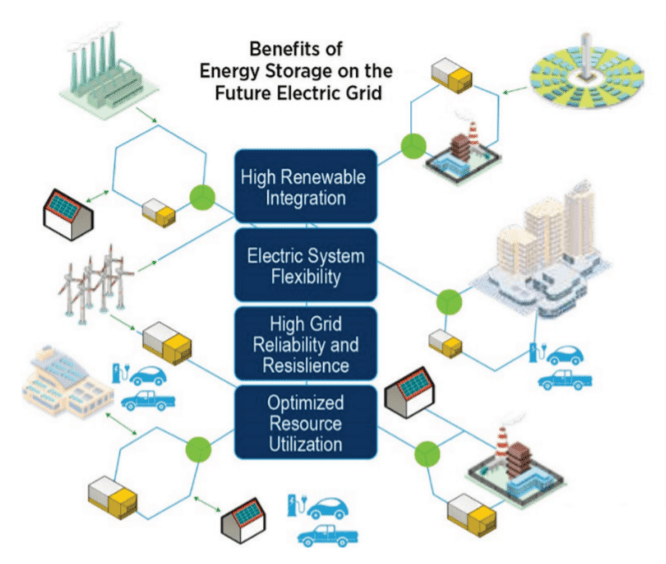
Photo Credit: US Department of Energy

We may be a ways-off of large-scale adoption of battery systems at home, but what about utility scale adoption? Well as of today, we don’t quite have a solution for utility scale adoption but that doesn’t mean that we aren’t striving towards it. Here is a report by the U.S. Department of Energy highlighting over 30 research teams that are working on innovative ways to tackle our energy storage woes. These research topics range from improving existing technologies such as the architecture of lithium-ion batteries and improving zinc-bromide flow batteries to experimenting with new energy dense element composites for batteries. The takeaway here is that even though we do not have an answer right now, we do have thirty+ potential answers, or even partial answers that can be utilized in the future to meet our energy storing needs.

If there are any battery innovations you are most excited about, leave a comment down below to keep the conversation going.
The Dark Side of Solar

Earlier this week we discussed the drawbacks of hydroelectricity. In my last post I touched on potential drawbacks of solar farms. Before I continue, I will emphasize that I am a staunch believer that renewable energy is the future of our energy grid and the key to a habitable planet sustaining a wide biodiversity. However, as I have stated in previous posts, I believe that having a discussion, to address both sides of the issue is vital to solving our problems and finding the most suitable course of action. Solar or photovoltaic energy is a phenomenal innovation and I hope it will be at the forefront of domestic energy production. Solar energy is also the cheapest electricity in the history of, well, electricity. However, there are some drawbacks that need to be considered.

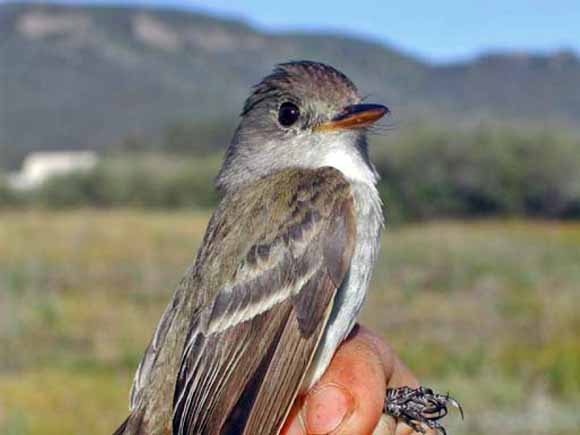
Southwestern willow flycatcher, photo credit: U.S. Geological Survey

Above I mentioned domestic production of energy via photovoltaic panels, which circumvents the first draw back of utility scale solar energy farms, wildlife habitat loss. In 2020 the United States power grid generated roughly 0.004 billion gigawatts of energy. Secondly, it takes 2.8 acres to produce one gigawatt of energy per year. That would mean that we would need to cover 11.2 million acres of land in solar panels if we were to build an entirely solar energy grid. That is somewhere directly in the middle of the land mass of Maryland and West Virginia. Thinking about utility scale solar farms, it would be intuitive to place these projects in the south western U.S. deserts as the sunshine is strong and consistent with minimal rainfall. However, further destruction of these habitats puts further strain on the populations of the desert tortoise, the devils hole pupfish, the southwestern willow flycatcher, and Amargosa toad, to name a few.

So, would a domestic grid alleviate the land use debacle? Yes, but there are other ways that photovoltaic panels can still contribute to an unsustainable environment. When it comes to tech, the environmental impact is often not secluded to the product itself but also lies in the production process as well as the harvesting of the raw materials necessary to begin the production process. For example, silicon is an integral part of a photovoltaic panel. Silicon needs to be mined as quartz and then processed or as silica sand. Not to get too in depth on this matter, but it is an important factor to consider as the mining of this resource contributes to polluting local wells and ground water as well as polluting the air around the mine. And this is only including one element that makes its way into the finished product and not even beginning to consider the chemicals needed to appropriately process the raw or refined materials into the finished product.

My point here is that we need to consider the costs, other than monetary when designing a renewable grid for the future. There are factors we can alleviate, such as habitat destruction by opting for domestic solar production, and factors that appear to be a sunk cost on the road to progress. I am not saying that it needs to be that way, nor am I saying I have all the answers. I am simply trying to start a conversation in the hope of spreading awareness that can lead to actionable changes. If you would like to continue this conversation, leave a comment down below, or start a conversation of your own.